
How to Avoid Costly Sign Code and Installation Mistakes
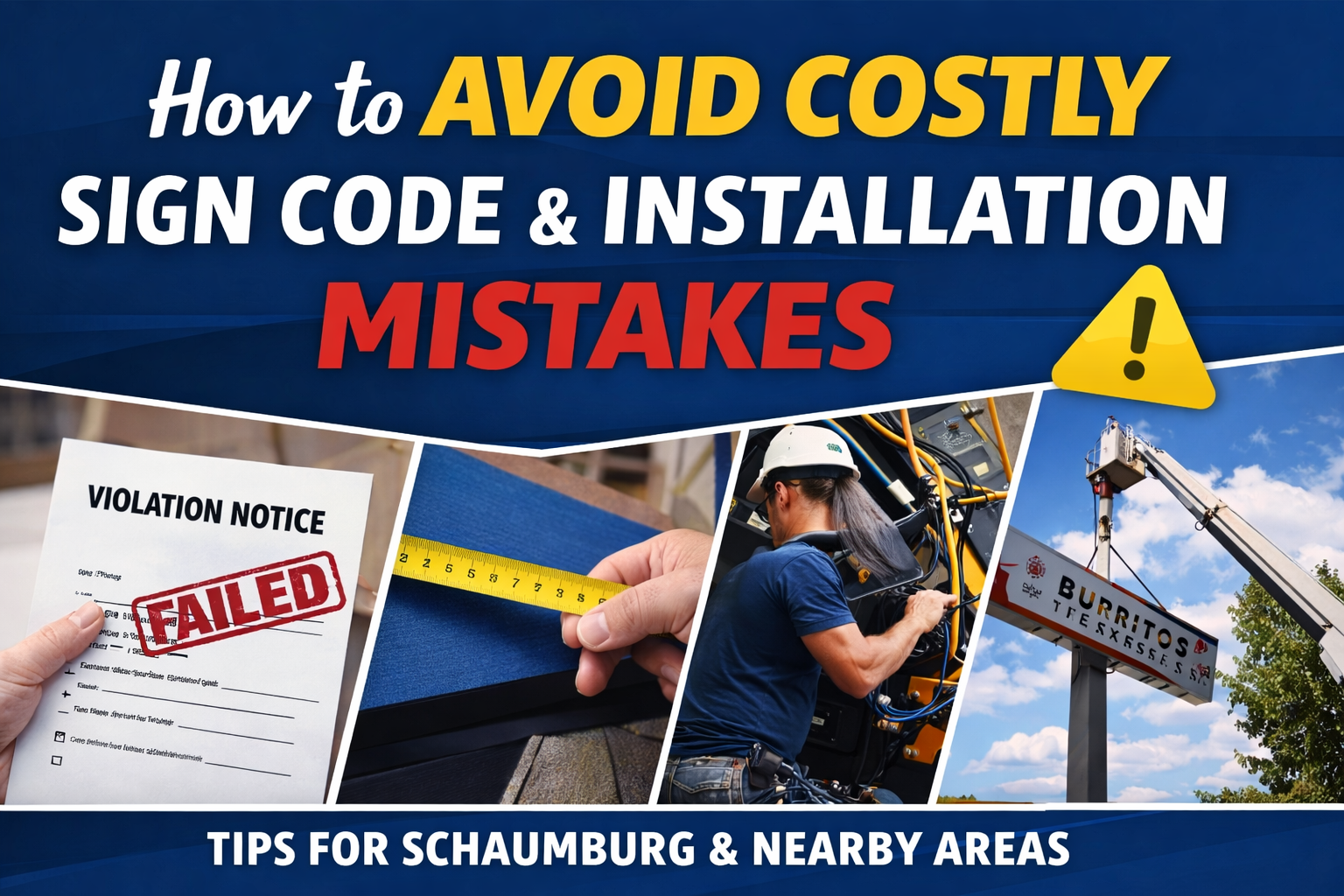
When it comes to signage, first impressions matter and mistakes can be expensive. From selecting the wrong materials to misreading local sign codes, errors in design, permitting, or installation can quickly turn a simple project into a costly headache. Whether you’re a business owner looking to attract customers or a property manager overseeing multiple sites, understanding the common pitfalls in sign code compliance and installation is essential.
In this guide, we’ll walk you through the key steps to avoid costly mistakes, save time, and ensure your signage not only looks great but also meets all legal requirements.
What is Sign Code Compliance?
Sign code compliance refers to following the local laws, regulations, and standards that govern the size, placement, lighting, and type of signs you can display on your property. These rules are usually set by city or county governments to ensure safety, maintain aesthetics, and prevent distractions for drivers or pedestrians.
Compliance can cover a wide range of factors, including:
• Size restrictions: Limits on how large or tall a sign can be.
• Location requirements: Rules about how close signs can be to streets, sidewalks, or neighboring properties.
• Lighting regulations: Guidelines for illuminated signs, including brightness and timing.
• Material and structural standards: Ensuring signs are safe, durable, and weather-resistant.
Failing to comply with sign codes can result in fines, forced removal, or costly redesigns. Understanding these requirements before designing or installing a sign is critical to avoiding unexpected expenses and delays.
Common Sign Code Mistakes
Even experienced business owners and contractors can run into trouble when it comes to sign code compliance. Small oversights or assumptions about what’s allowed can quickly turn a straightforward project into a costly headache. Being aware of the most common mistakes can help you avoid fines, delays, and even the need to completely redo your signage.
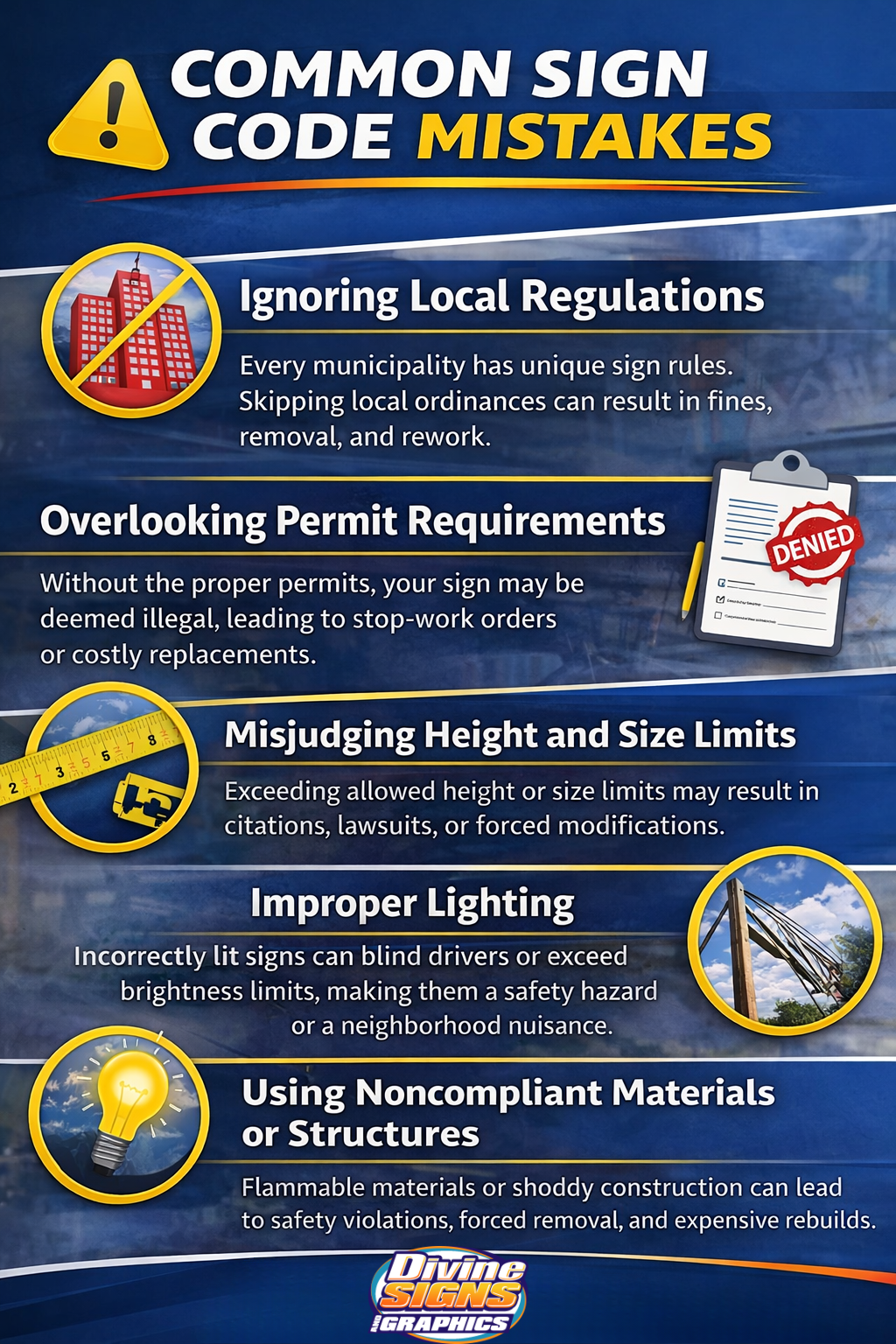
Ignoring Local Regulations
Every city or county has its own set of rules regarding signage. These regulations can cover everything from the maximum size and height to color restrictions and illumination limits. Using signage that doesn’t meet local codes, whether intentionally or unknowingly, can result in fines, citations, or even mandatory removal of the sign. Taking the time to research local ordinances upfront can save significant time and money later.
Overlooking Permit Requirements
Many types of signs require permits before installation. These permits ensure that your signage meets zoning, safety, and building standards. Skipping this step may seem like a shortcut, but it can lead to legal complications, additional fees, or forced removal. Permit applications also provide an opportunity to catch potential compliance issues before installation.
Misjudging Height and Size Limits
One of the most frequent violations involves exceeding the maximum allowed dimensions or height. Even a sign that is slightly taller, wider, or larger than permitted can trigger enforcement actions. Misjudging these limits can cause costly delays, as the sign may need to be resized or relocated to comply with regulations.
Improper Lighting
Illuminated signs are particularly tricky because they must adhere to specific brightness, placement, and timing requirements. Lighting that is too bright, shines in the wrong direction, or operates outside permitted hours can violate codes, disturb neighbors, or even create safety hazards for drivers. Ensuring that lighting is designed and installed correctly is essential for both compliance and community goodwill.
Neglecting Visibility and Safety Standards
Signage should never obstruct traffic sightlines, pedestrian pathways, or emergency access points. Failure to consider these safety factors can not only violate codes but also increase liability risks. Careful planning of your sign’s location and orientation helps protect both your customers and your business.
Using Noncompliant Materials or Structures
Many local codes specify acceptable materials for fire safety, durability, or structural integrity. Using the wrong materials, such as flammable or weak supports, can force you to redo the sign entirely and may even pose safety risks. Choosing compliant materials from the start is a small step that can prevent major problems down the line.
By understanding these common pitfalls, you can plan your signage project more strategically, avoid unnecessary expenses, and ensure a smooth, compliant installation process that serves your business for years to come.
Common Sign Installation Mistakes
Even with a well-designed, code-compliant sign, mistakes during installation can lead to unnecessary costs, safety hazards, and long-term problems. Proper installation is just as important as careful planning, and overlooking even small details can create serious issues down the line. Here are some of the most common installation errors to watch out for.
Incorrect Measurements and Placement
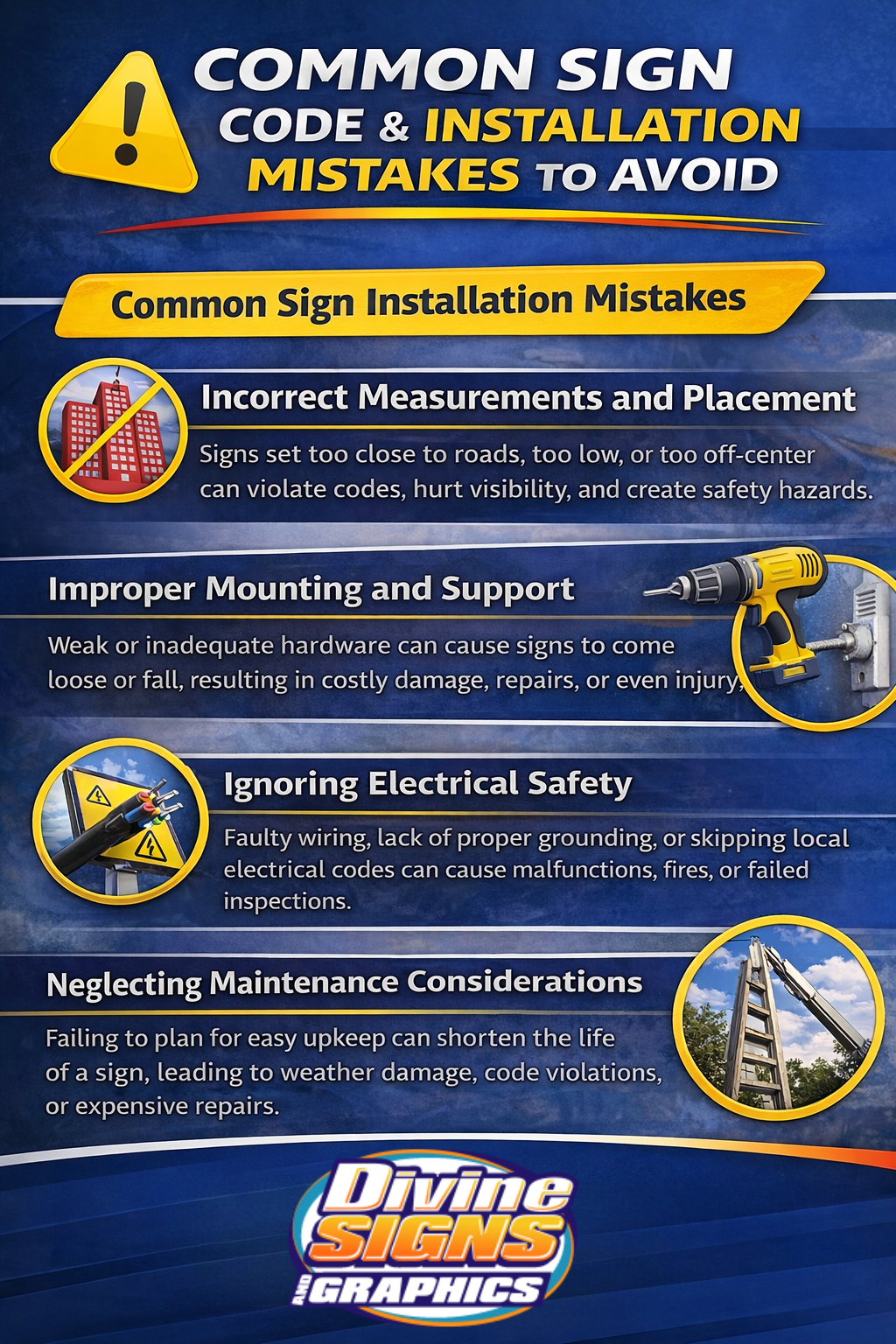
Installing a sign in the wrong location or at an incorrect height can have multiple consequences. It may violate local codes, reduce the sign’s visibility to customers, or create hazards for pedestrians and drivers. Even minor placement errors, like positioning a sign too close to a curb or obstructing a sidewalk, can result in fines or costly adjustments. Careful measurement and mapping of the installation site are essential to avoid these problems.
Improper Mounting and Support
Using the wrong hardware, fasteners, or structural supports can compromise the sign’s stability. In areas prone to wind, snow, or other severe weather conditions, an improperly mounted sign can bend, fall, or sustain damage, leading to expensive repairs or replacements. Ensuring that your sign is securely anchored and supported is critical for both safety and longevity.
Ignoring Electrical Safety
Illuminated signs require careful electrical installation. Improper wiring, failure to meet local electrical codes, or inadequate grounding can create serious fire hazards or lead to frequent malfunctions. Even if the sign lights up initially, faulty installation can result in long-term maintenance issues and safety risks. Hiring qualified electricians or trained professionals for this step is strongly recommended.
Skipping Professional Installation
While DIY installations may seem like a way to save money, inexperienced handling often results in misaligned, unstable, or unsafe signage. Professionals have the tools, experience, and knowledge of local regulations to ensure that your sign is installed correctly, looks polished, and meets all code requirements. Their expertise can prevent costly mistakes that a DIY approach might overlook.
Neglecting Maintenance Considerations
Signs are not a “set it and forget it” investment, they require periodic inspection and upkeep. Installing a sign in a location that is difficult to access for maintenance or cleaning can shorten its lifespan and lead to expensive repairs. Planning for long-term maintenance during installation ensures that the sign remains functional, attractive, and safe for years to come.
By being aware of these common installation mistakes and taking proactive steps to avoid them, you can ensure your signage is safe, durable, and fully compliant with both design standards and local regulations. Proper installation protects your investment, enhances your brand visibility, and keeps your business in good standing with the community.
How Working with a Professional Can Help You Avoid Costly Mistakes
Partnering with a reputable sign design and installation expert like Divine Signs and Graphics can make a world of difference when it comes to avoiding the common pitfalls discussed above. These professionals bring years of experience, technical know how, and a deep understanding of local requirements, helping you save time, money, and stress on every signage project.
Here’s how working with a professional sign company can help you avoid costly sign code and installation mistakes.
Expert Knowledge of Local Codes and Permits
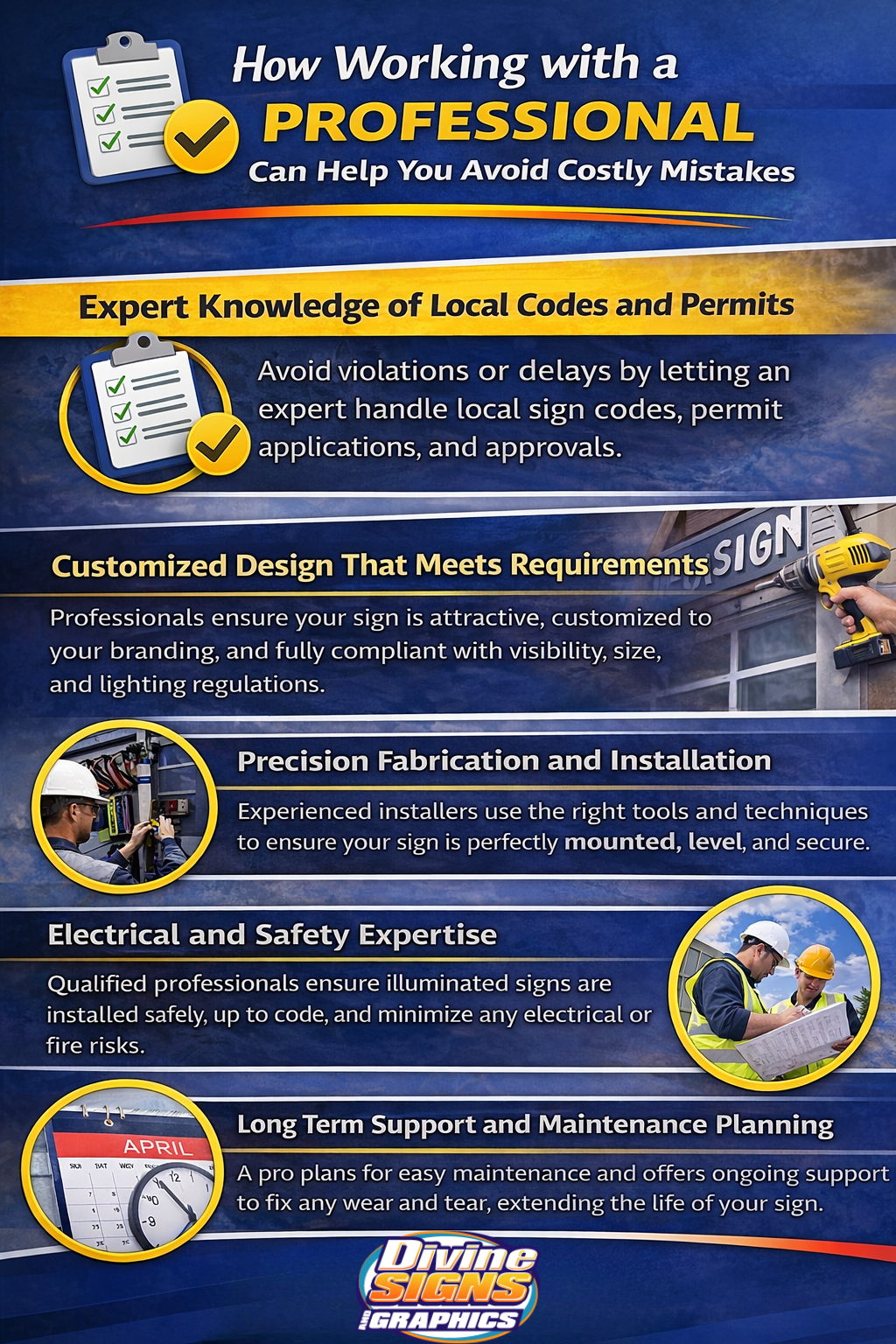
Sign regulations vary widely by municipality, and understanding the nuances of local code compliance is critical. Professional sign designers stay up to date with zoning laws, size limitations, lighting restrictions, and permit requirements, so you don’t have to worry about costly violations or re submissions. Their guidance can help you avoid common regulatory mistakes before they happen.
Customized Design That Meets Requirements
A professional team can translate your vision into a sign design that not only looks great but also complies with all specifications. They factor in visibility, readability, branding, and safety standards from the start, ensuring your signage communicates effectively while avoiding avoidable errors.
Precision Fabrication and Installation
Improper mounting and installation can lead to structural problems, safety hazards, or even damage during severe weather. Experienced installers use the right tools, hardware, and techniques to make sure your sign is secure, level, and built to last.
Electrical and Safety Expertise
For illuminated signs, electrical work must be code compliant and safe. Professionals partner with licensed electricians or have in house expertise to handle wiring correctly, reducing fire risks and ensuring reliable performance.
Long Term Support and Maintenance Planning
Beyond just installation, a good sign partner can help plan for maintenance and future upgrades. They’ll ensure that your signage is accessible for cleaning, repairs, or updates, helping extend its lifespan and prevent costly fixes later.
Smooth Project Management from Start to Finish
From initial consultation to final installation, professionals manage every step of the process. They coordinate design, fabrication, permitting, and installation so you can focus on your business, not signage logistics.
FAQ
1) Do I need a permit for a new business sign in Schaumburg or nearby suburbs?
Often, yes, especially for wall signs, illuminated signs, monument/pylon signs, and many permanent exterior installations. Requirements vary by municipality, so it’s smart to confirm early before ordering or installing.
2) What are the most common sign code violations?
The biggest issues usually involve sign size, height, placement (setbacks), illumination rules, and zoning restrictions. Even “small” overages can trigger notices, delays, or rework.
3) Can an existing sign be “grandfathered in” under older codes?
Sometimes, but not always. Changes like relocating a sign, changing the structure, or major upgrades (especially electrical/illumination) can require current-code compliance. A quick review helps avoid surprises.
4) What installation mistakes cause the most expensive fixes?
Incorrect placement, weak mounting/hardware, and improper electrical work for illuminated signs. These can lead to safety issues, weather damage, failed inspections, or removal and reinstall costs.
5) How does Divine Signs help with sign code compliance and installation?
We help businesses across Schaumburg and surrounding areas plan signage with code and visibility in mind, support the permitting process when needed, and install signs professionally so they’re secure, level, and built to last.
Ready to Get Your Sign Right the First Time?
Avoiding costly mistakes in sign code compliance and installation doesn’t have to be stressful. By working with experienced professionals, you can ensure your signage is safe, attractive, and fully compliant, saving you time, money, and headaches down the road.
At Divine Signs and Graphics, we specialize in designing and installing high-quality business signs that meet all local regulations while helping your brand stand out. From initial consultation and permit guidance to precise fabrication and secure installation, our team handles every step of the process with expertise and care.
Don’t risk fines, rework, or unsafe installations, let the experts at Divine Signs and Graphics bring your vision to life with signs that are both impactful and compliant.
Contact Divine Signs and Graphics to schedule a consultation and take the first step toward signage that works for your business and lasts for years to come.

Let Us Get Started with your next big idea...

